Demo shop made by Betta Studio: Terre & Lin is a fictional business and nothing is for sale. I want a website like this

Our story

A potter, a seamstress and a street of dyers: Terre & Lin was born when two workshops decided to become one.

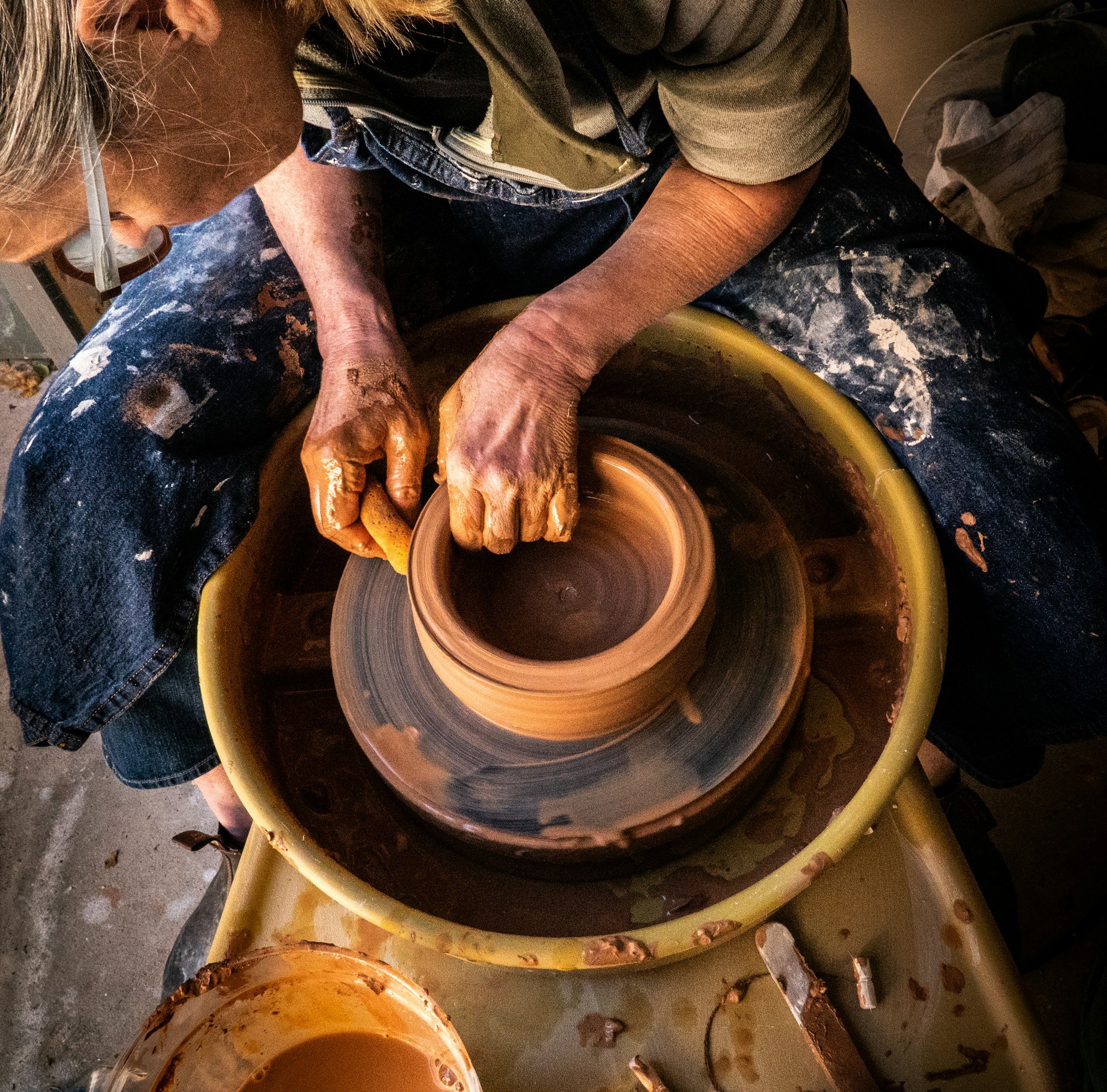
A potter shaping a bowl on her wheel
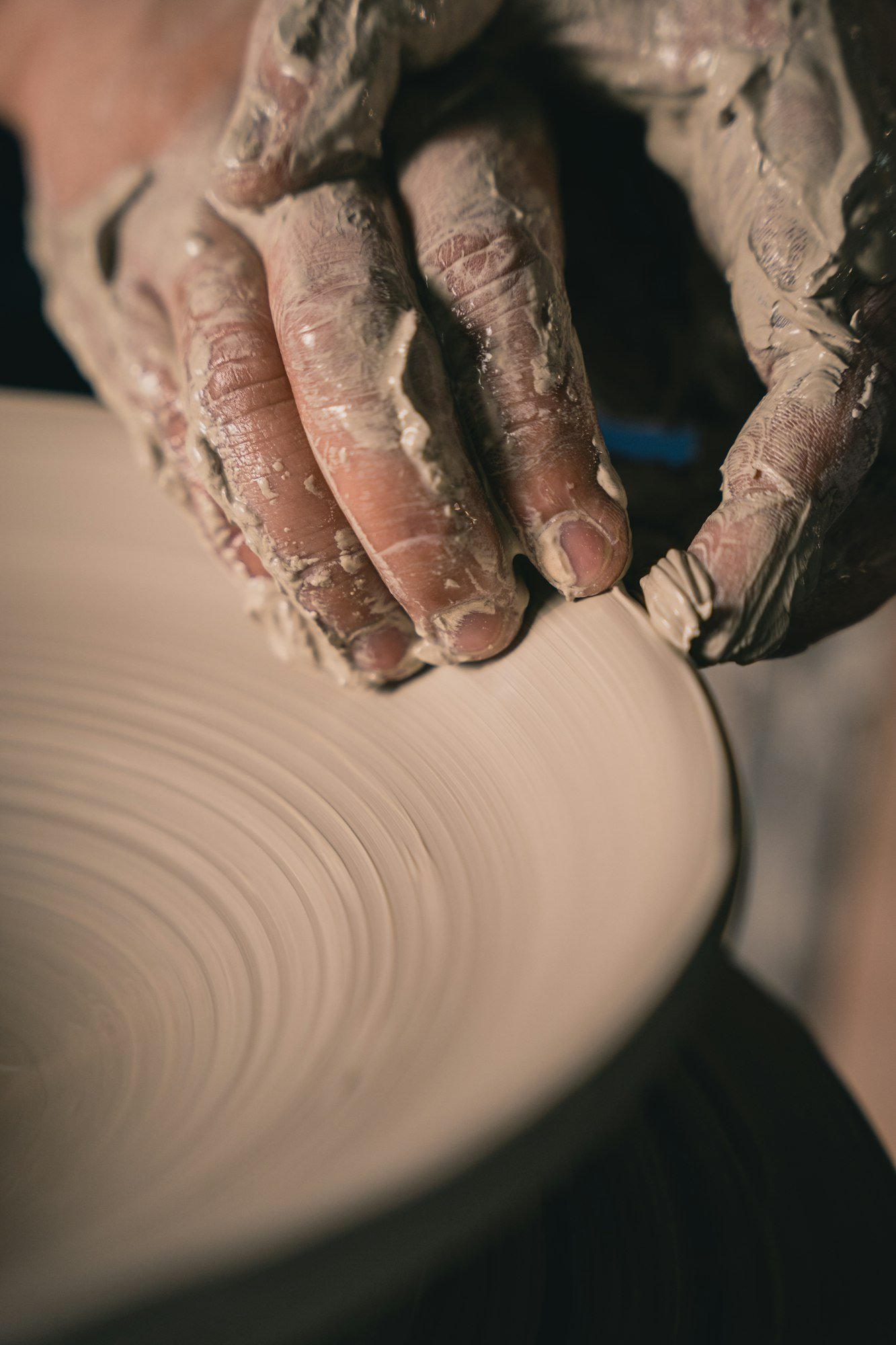
Clay-covered hands raising a piece on the wheel
The founders

“We wanted things that get used every day”

Camille Le Goff learnt to throw pots in Saint-Amand-en-Puisaye, the potters’ village, before opening her workshop in Rouen. Lucie Marchand, a seamstress, worked linen for Parisian linen houses. They met at a makers’ market in 2018, their stalls side by side.

A year later they took over an old dye works on rue Eau-de-Robec: the pottery at the back, the sewing room upstairs, the shop on the street. Their rule has stayed the same: only sell what they use at home, and only a few things, so they can make or finish everything in Rouen.

Camille Le Goff et Lucie Marchand

Potter and seamstress, founders

Linen

From the field to your bed, in eight steps

France produces around three quarters of the world’s textile flax, almost all of it between Normandy and Hauts-de-France. Ours grows in the Pays de Caux, 70 km from the workshop.

  1. March

    Sowing

    Flax is sown densely so that the stems grow tall and straight.

  2. June

    Flowering

    Each blue flower lasts just one day; the field blooms for about two weeks.

    Blue flax flowers in a field, in the sun
  3. July

    Pulling

    Flax is not cut but pulled up, to keep the full length of the fibre.

  4. August

    Retting

    Laid on the ground, flax is worked by dew and sun, which loosen the fibre from the stem.

    A flax field in flower under a clear sky
  5. Autumn

    Scutching

    The long fibres, the tow, are separated from the woody stem.

  6. Winter

    Spinning and weaving

    The fibre is wet-spun, then woven into cloth in the north of France.

  7. Spring

    Washing

    The cloth is stone-washed: it softens and will not shrink again.

  8. In Rouen

    Sewing

    Lucie cuts, sews and finishes every piece upstairs from the shop.

Stoneware

Thrown, dried, fired twice

Camille throws every bowl, mug and vase on her wheel, then leaves them to dry for a week before a first firing at 980 °C. Then comes glazing, by hand, and the second firing at 1,280 °C, which vitrifies the clay.

That makes three weeks between the lump of clay and the piece on the shelf. It is why some glazes are sometimes sold out: we would rather wait for the next kiln load than have things made elsewhere.

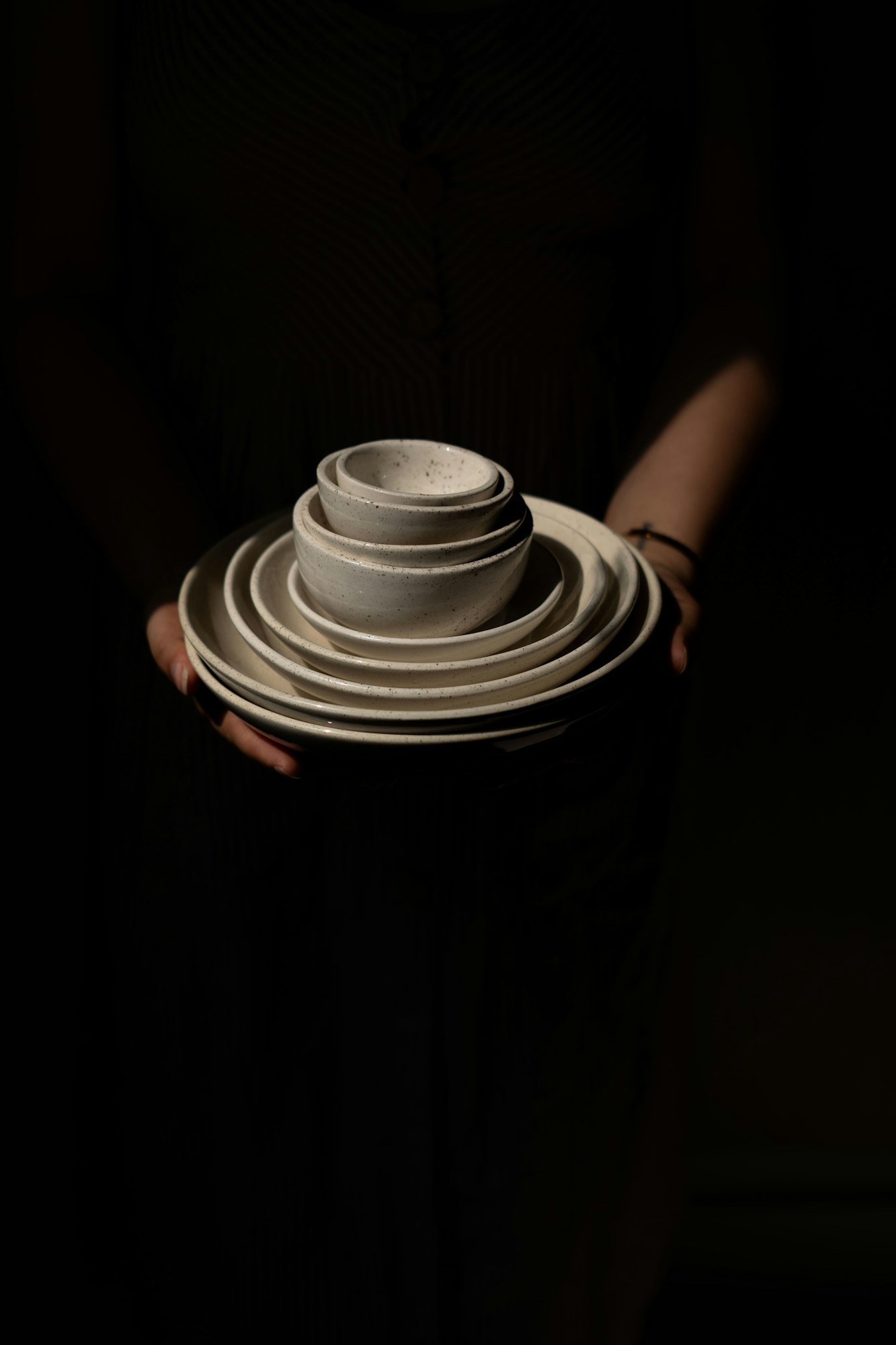
Two hands holding a stack of stoneware plates and bowls
In pictures

The shop on rue Eau-de-Robec

Come and see us

The shop and workshop

A short walk from Place Saint-Marc and ten minutes on foot from the cathedral, in the old dyers’ street. Orders placed online can be collected there free of charge, ready two hours after you order.

Terre & Lin, shop and workshop

Closed now · Opens tomorrow at 10:30

Opening hours
MondayClosed
Tuesday – Friday10:30 – 19:00
Saturday10:00 – 19:00
SundayClosed

The pottery workshop can be seen from the shop: come and watch the bowls being thrown on Saturday mornings.